

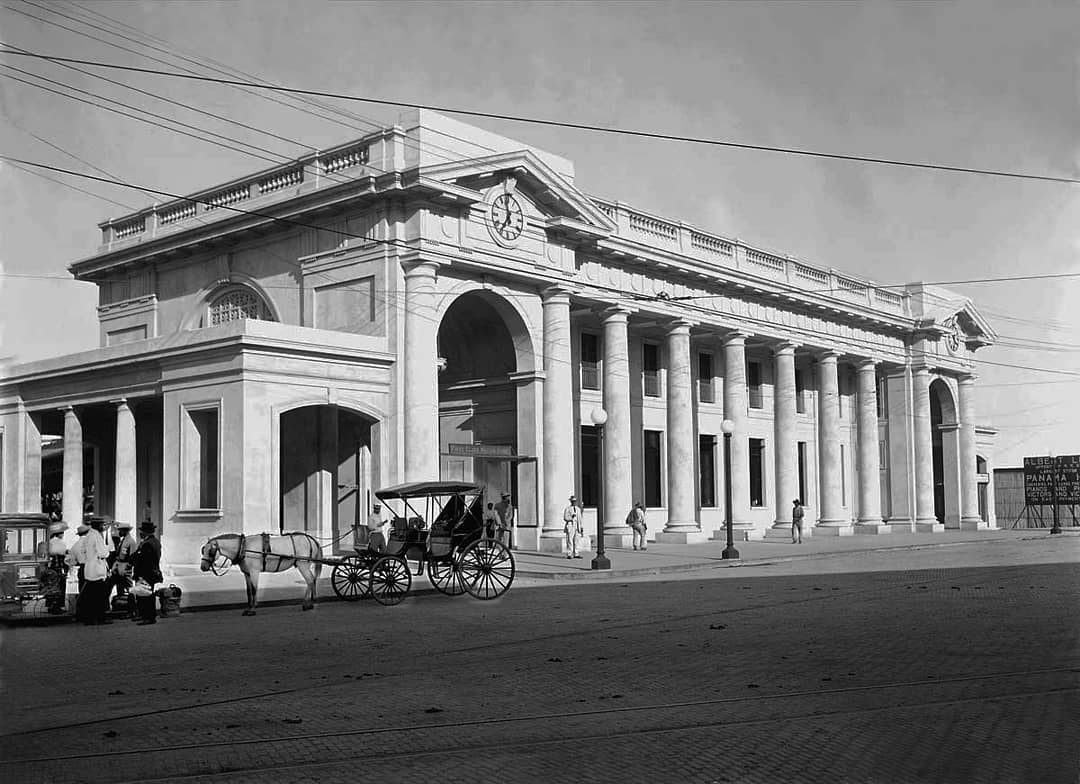
Facing the current Plaza 5 de Mayo stands a building that best encapsulates Panama’s transformation over the last two centuries: the former Panama Railroad Central Station, now associated with the Reina Torres de Arauz Anthropological Museum (MARTA).
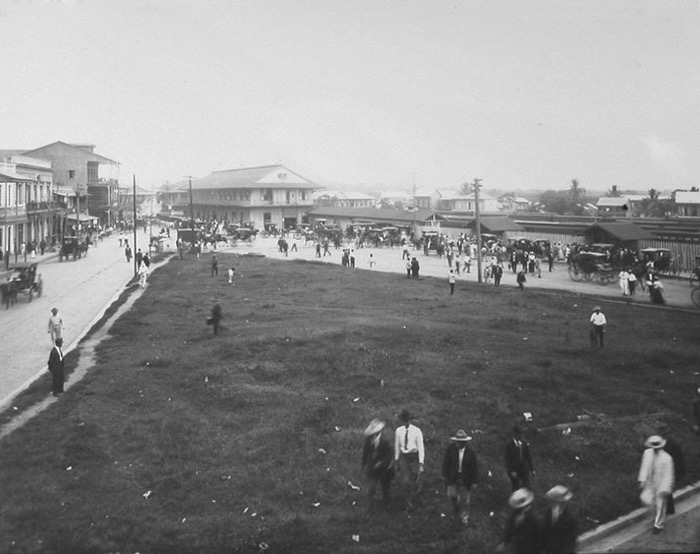
Key Pacific Connection Point
Construction of the current Central Station was completed in August 1913; it was designed by Homer E. Bartlett, an architect associated with the Panama Railroad.
The station became fully operational on March 1, 1914. Its architecture was inspired by the Roman Doric style, featuring spacious areas for passengers and railway services. It housed first- and second-class waiting rooms, a ticket office, and areas for baggage, mail, and parcel services, as well as administrative offices.
For decades, the station served as the Pacific-side railway terminal and a major hub for travelers crossing the isthmus. Railway operations at the site came to an end on October 28, 1966, with the departure of the last train.
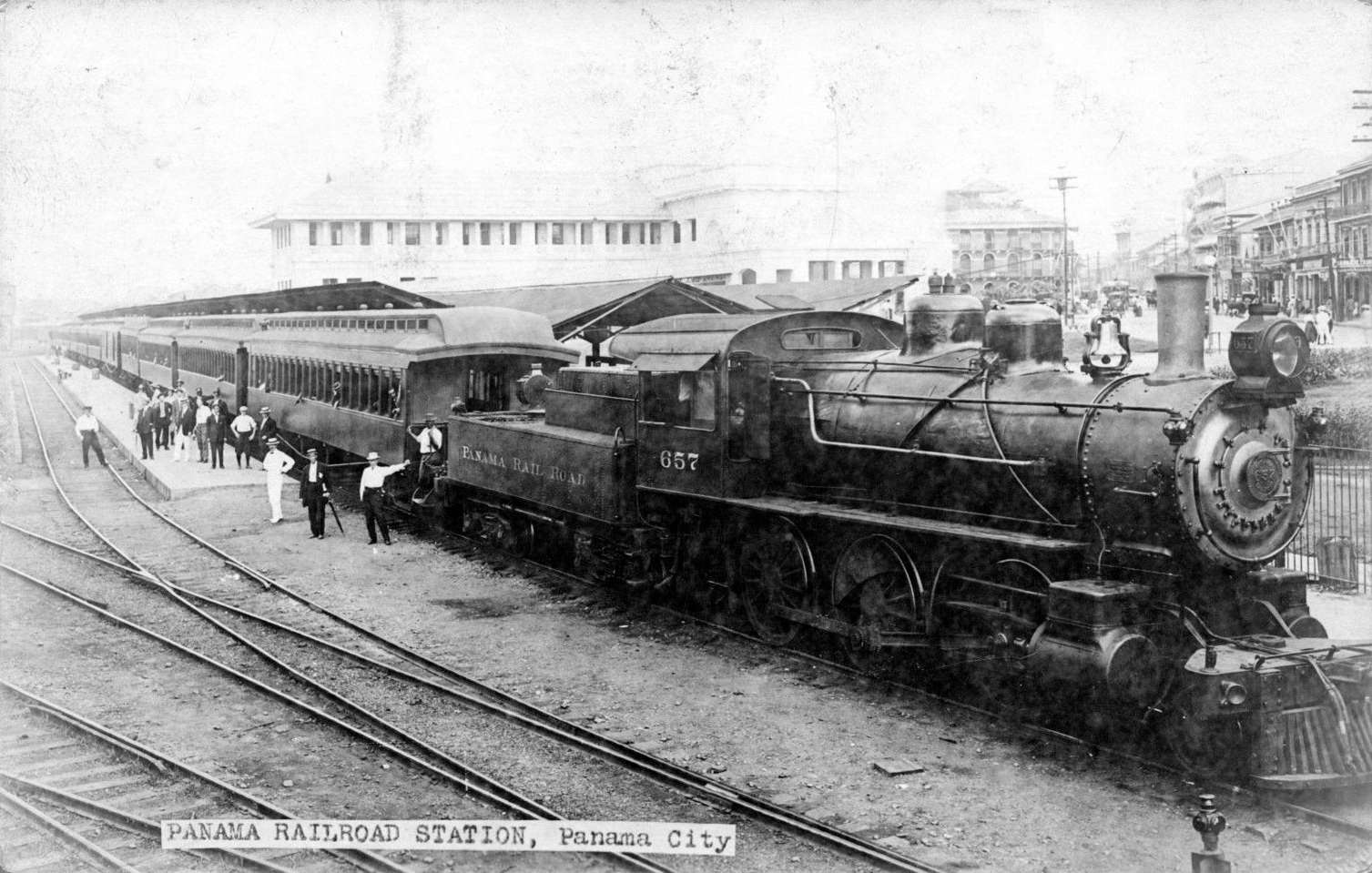
From Station to Museum
The old building ceased to function as a passenger terminal and began to serve various public purposes, including vaccination services and area for temporary accommodation.
The most significant transformation took place in the 1970s. Spearheaded by anthropologist Reina Torres de Arauz, the historic building was assigned a new mission: to preserve and share Panama’s cultural history.
On December 15, 1976, the Museum of Panamanian Man opened its doors there, dedicated to preserving archaeological and anthropological collections related to the cultures of the isthmus.
The site that had served for decades to connect two oceans was now beginning to connect Panamanians with their own history.
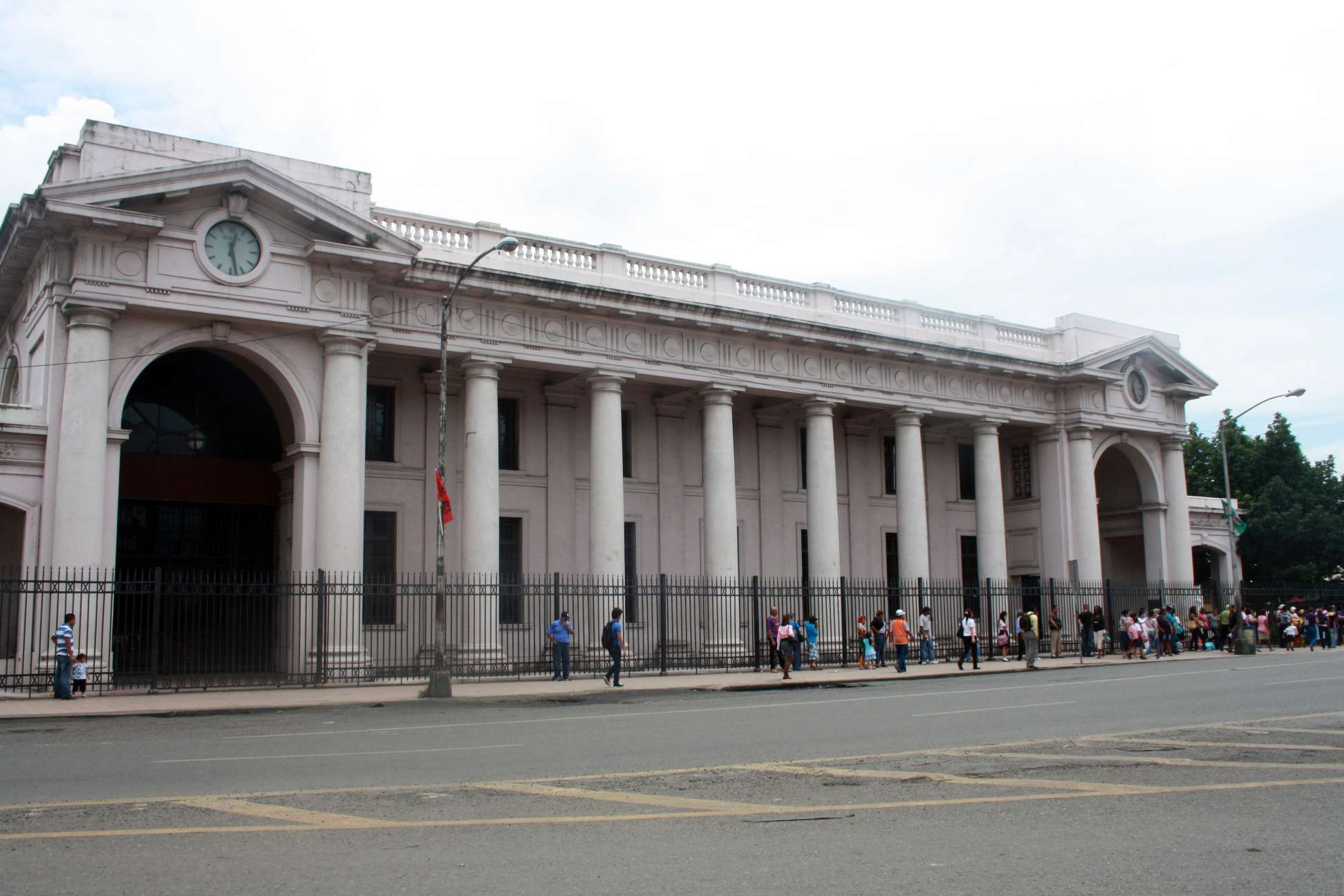
The Legacy of Reina Torres de Arauz
Following the renowned anthropologist’s death, the museum was officially named the Reina Torres de Arauz Anthropological Museum. In 1996, the building was declared a National Historic Monument in recognition of its architectural, historical, and cultural significance.
The museum remained at this location until 2013, when it closed to the public to begin a restoration process—work that resumed in 2020. A complete renovation is projected for the first quarter of 2027.