
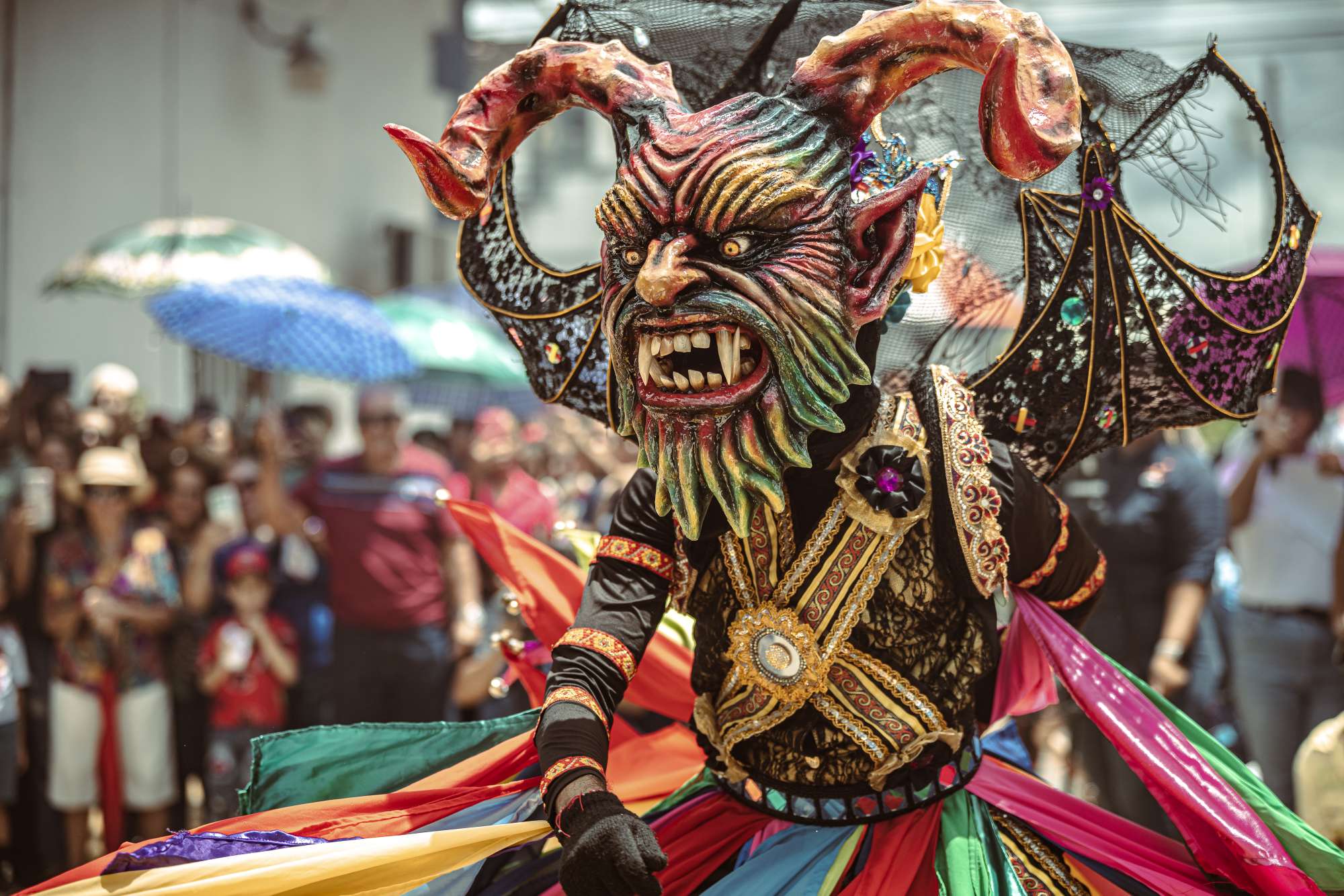
Corpus Christi is a cultural event that combines dances, religious and folkloric traditions, and in Panama it will be celebrated from May 30 to June 14, 2026. Recognized by UNESCO as Intangible Cultural Heritage, the Panamanian Corpus Christi will take place in different parts of the country, with the main hub being La Villa de Los Santos.
This custom, brought from the Old World with a strong Spanish influence, is one of the oldest artistic and cultural expressions in the country. This massive gathering seeks to represent, through multidisciplinary art, the eternal struggle between Good and Evil, a tradition that dates back to the 16th century.
A Celebration Held in Several Inland Towns
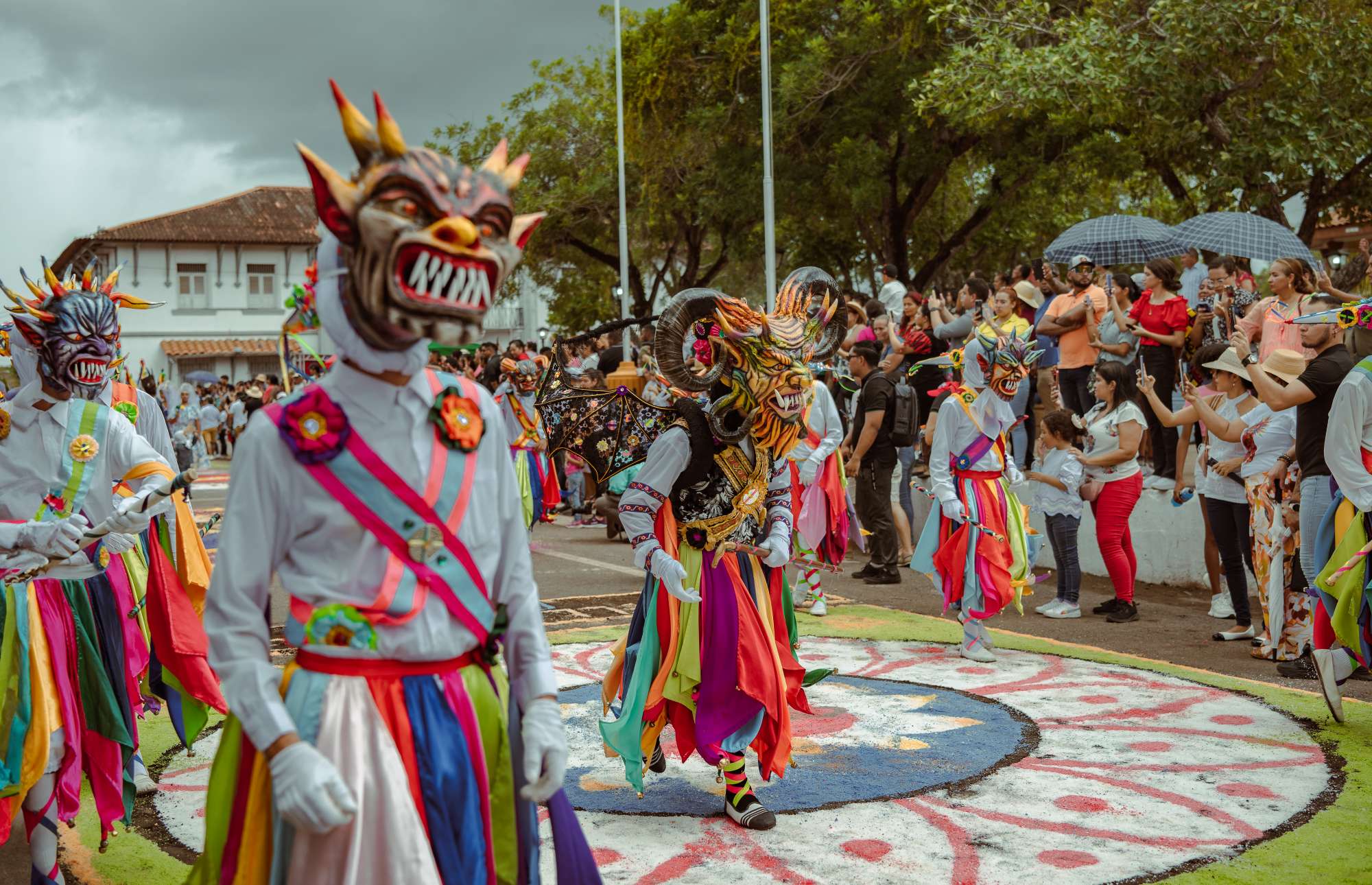
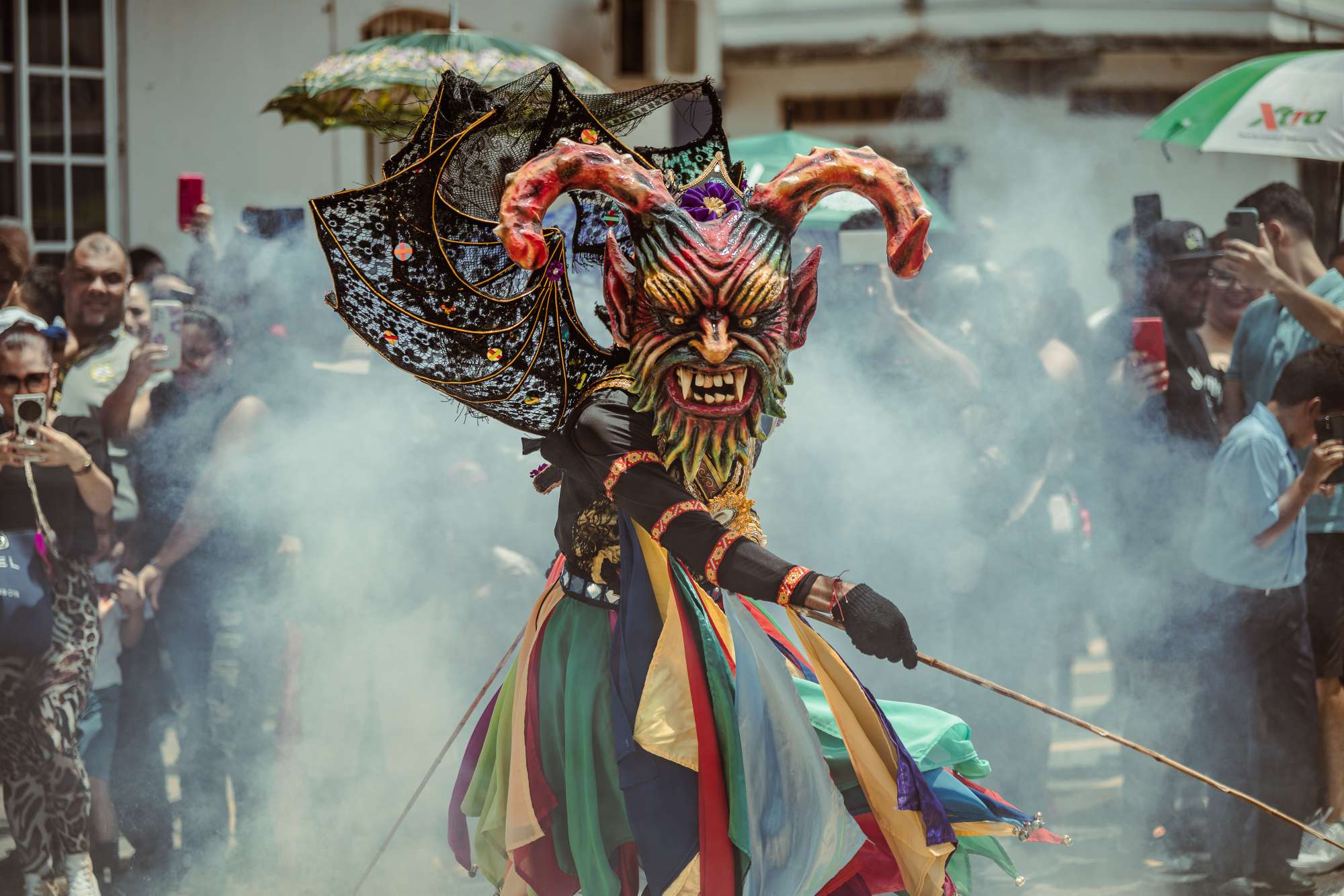
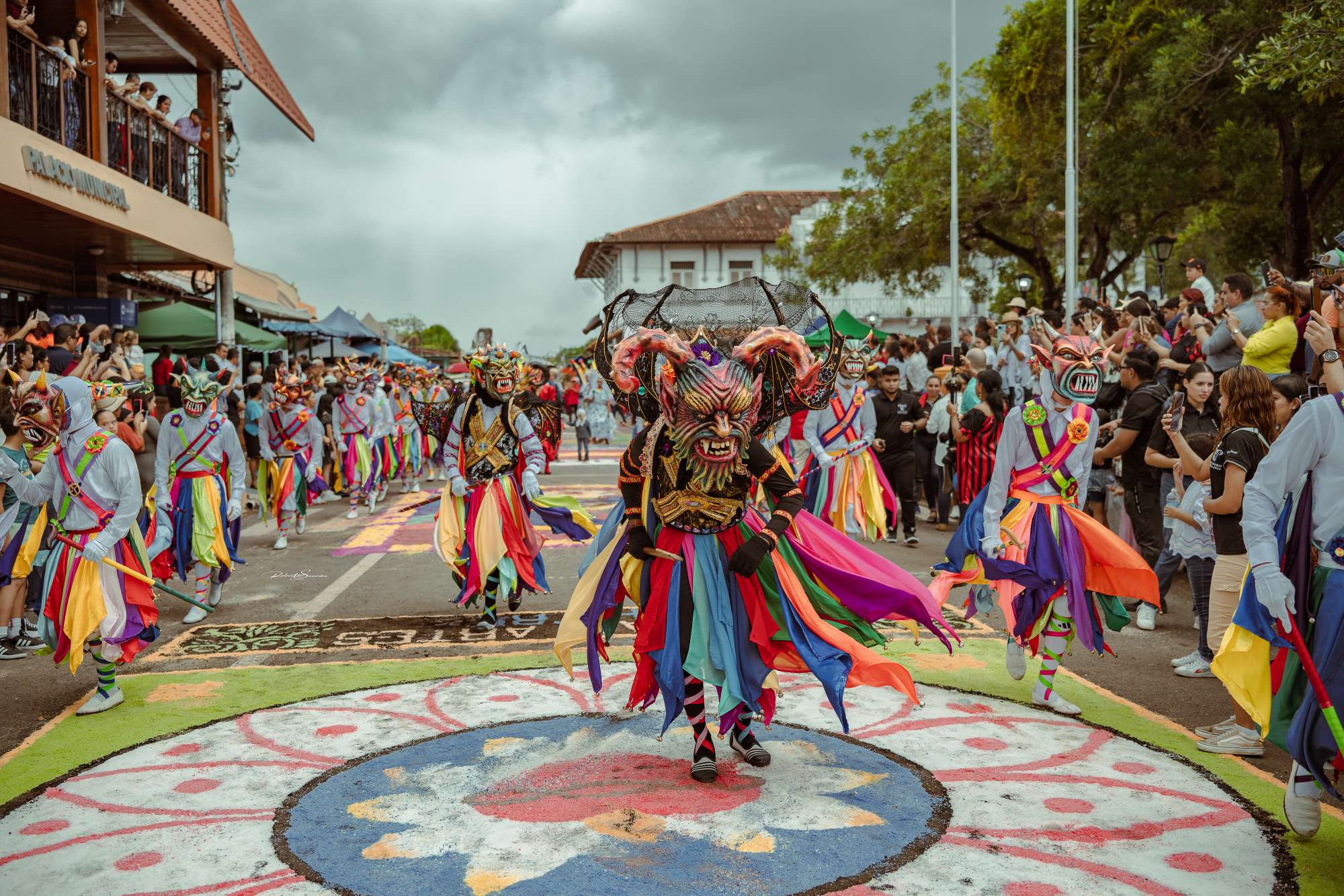
Corpus Christi, or in Spanish, the Crucified Body, is celebrated in other inland towns such as the city of Penonomé in the province of Coclé; Chitré in the province of Herrera; and Chepo in the province of Panama. It is organized with greater care and attention as a tourist attraction in La Villa de Los Santos, the epicenter on the Azuero Peninsula. There, its main streets and plazas near the churches are transformed into a vibrant stage where the “clean devils,” “dirty devils,” and “mirror devils” clash once again in an ancestral dance.
This ceremonial festival, where Spanish Catholic beliefs merge with pre-Columbian rituals, best illustrates the eternal struggle between Good and Evil through dances that represent a continuous confrontation between light and darkness, always culminating in the victorious presence of the Archangel Michael over the diabolical figures.
Allusive Acts and Ceremonies
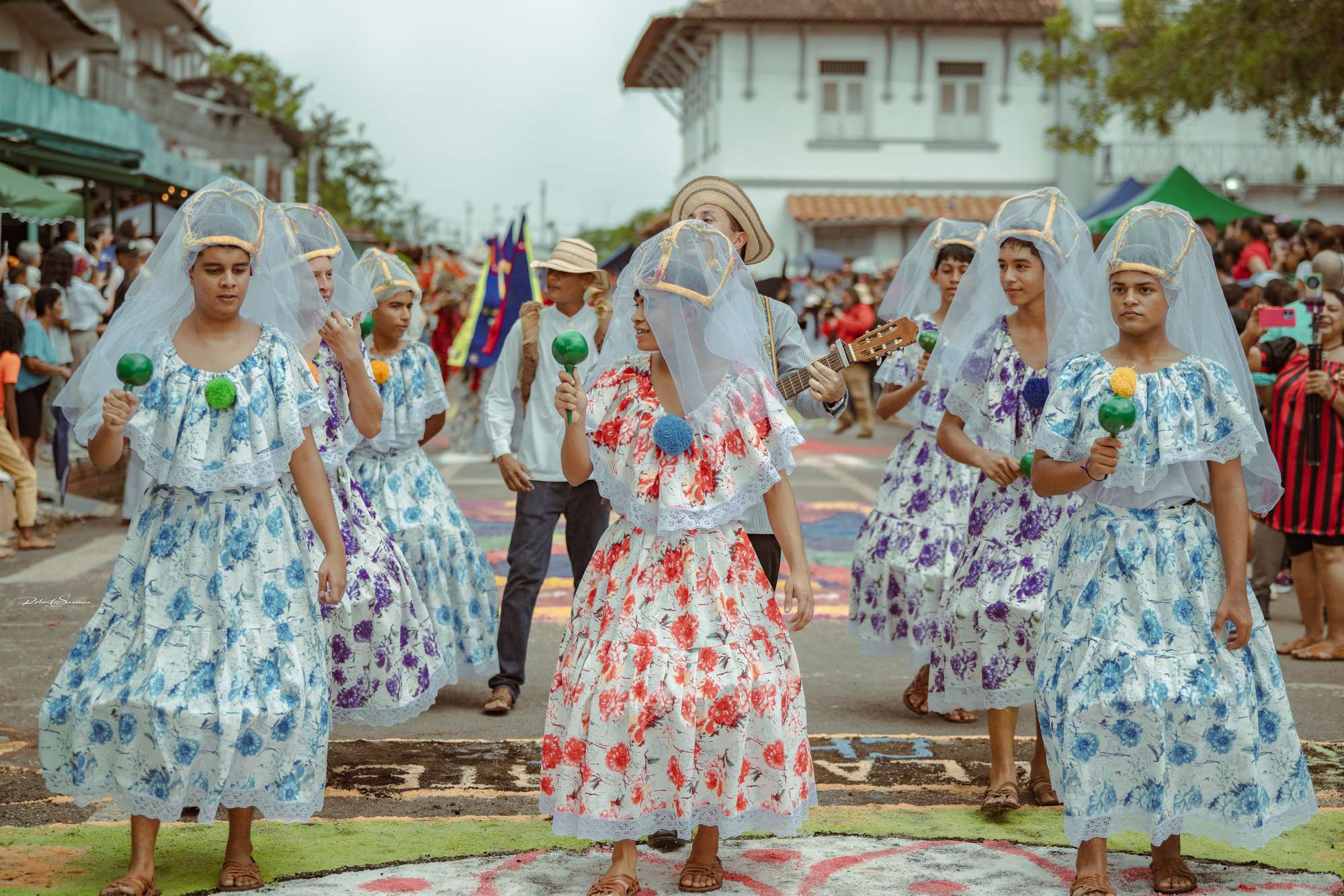
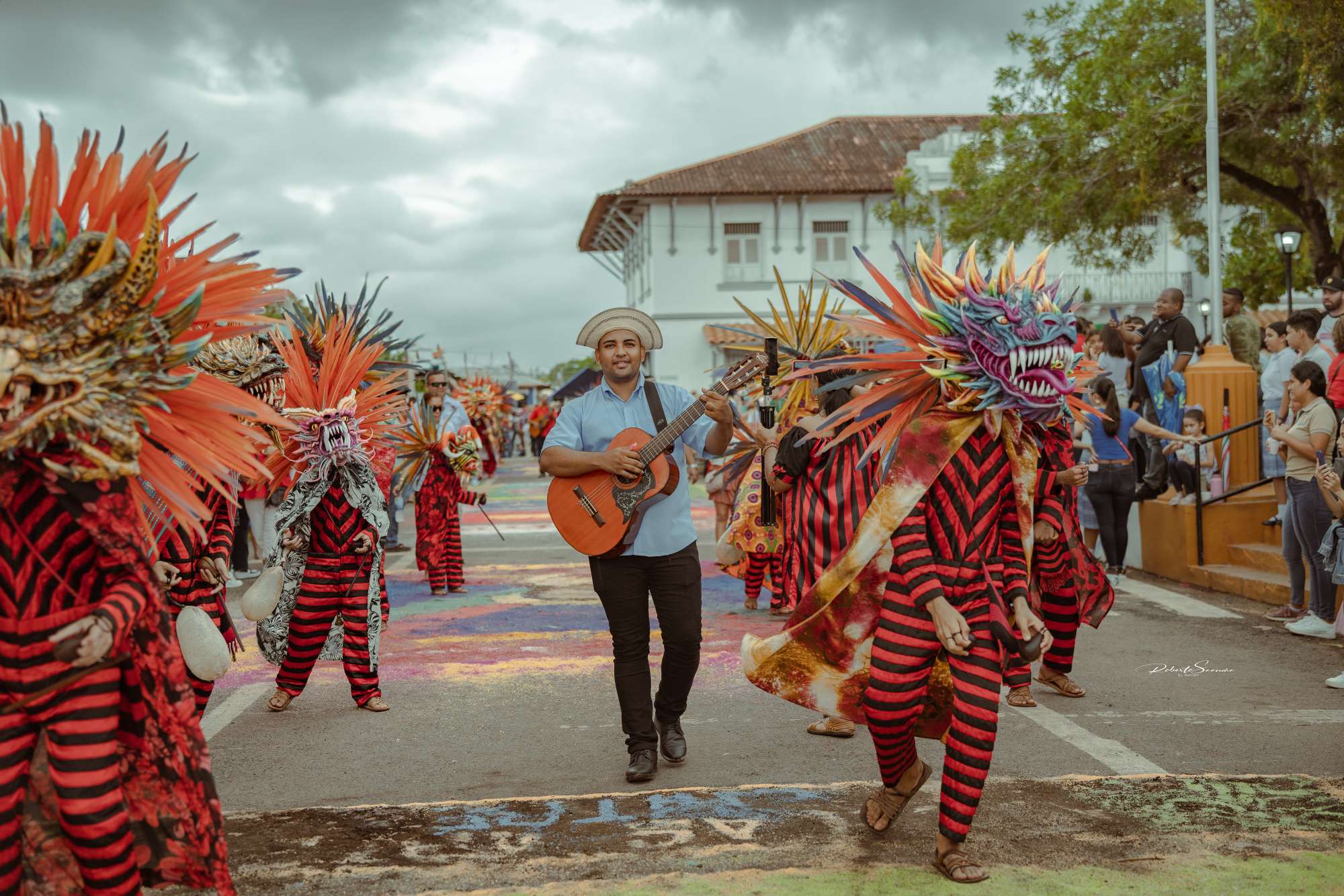
Each day begins with religious ceremonies in the churches, followed by processions through the plazas and alleyways, which fill with parishioners who observe and even participate in processions with prayers, accompanied by lively drums and music, and always graced by the company of ladies dressed in colorful traditional costumes of yesteryear.
In La Villa de Los Santos, there is a very unique commemoration in honor of the Body of Christ, incorporating deeply rooted elements from the colonial era. The most prominent and best ceremony, known as ‘Corpus Christi Thursday,’ is the day on which the main event takes place, although the celebration extends over several days.
Activities and Their Meaning
The eve of the Holy Trinity begins on the first day, which this year will be Saturday, May 30th at noon, when the entire Diablada (devil dance troupe) departs from Simón Bolívar Park while rockets are set off in their path. This custom gives rise to the term ‘Diablos Encueta’os’ (Devils with their heads covered).
Days later, in the middle of the week, specifically on Wednesday, June 3rd, around 11:00 a.m., the Diabla (female devil) will appear, who will be in charge of announcing the ‘Cuarteo del Sol’ (Quartering of the Sun) with dances, music, and cultural events throughout the day and part of the night.
The following day, Thursday, June 4th, on ‘Corpus Christi’ or ‘Jueves Corpus’ (Corpus Christi Thursday) – the main date – local traditional dances converge with dances from other invited Latin American countries, as a show of honor to the Blessed Sacrament of the Altar. In this procession, a priest will walk as the bearer of the monstrance, which holds the consecrated host, symbolizing in the Catholic faith the bread of the Eucharist, a powerful representation of the sacrifice of Christ’s body. Later, a Solemn Eucharist will be celebrated. In the town, many participants continue dancing and drinking in the streets, while others gather around the Floral Carpets. These carpets, made with designs covered in colored salt, sawdust, flowers, and other materials, adorn and rest on the four designated streets.
The folk dances and performances will be repeated in La Villa de Los Santos the following week:
- Thursday, June 11 (Octave of Corpus Christi).
- Friday, June 12 (Sacred Heart of Jesus Day).
- Saturday, June 13 (Tourism Day), with the main morning activity being the “Parade of National and International Dances.”
- Sunday, June 14 (Day dedicated to the Women of Los Santos).
It is worth noting that despite being a religious festival, it incorporates spontaneous gestures and burlesque acts to contrast the encounter between Spanish and indigenous cultures. One of the best-known dances, due to its historical narrative, is the Montezuma Española; the Montezuma Cabezona, in addition to dances of offerings and performances of indigenous scenes, such as peasant life, are all imbued with a great sense of humor.
The Corpus Christi celebration in Panama continues to be, year after year, one of the events worth experiencing firsthand or simply as a kind of witness to the Catholic devotion of the believing population in different parts of the country.