

Bocas Students Make Waves with Revive Reef Restoration Scholarship Program
A pioneering scholarship program is turning the tide for both students and the ocean. The Revive Reef Restoration Scholarship Program, launched in late 2024 by Mother of Corals, has already yielded remarkable results—creating young conservationists while rebuilding fragile reef ecosystems.
Training for Local Students to Study Coral Reef Restoration
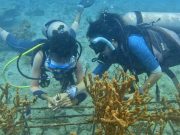
To date, the program has provided financial support and hands-on training for 17 local students since its inception to study coral reef restoration techniques. Over the course of several months, participants obtain their scuba certification from Bocas Pirates Dive Center and learn artificial reef methodology under the direction of Mother of Corals. So far 10 have graduated and 7 are on track to complete the program by the end of this year.
The impact has been twofold: not only have students gained valuable career-building experience in marine conservation, but the reefs themselves are beginning to flourish. Artificial reef structures were installed and coral fragments out planted across two local reef sites.
Bocas has historically not had many local community members introduced into a dive industry career path. This changes the potential for Bocas dive leaders to be Panamanian significantly. “I am very happy to witness the local youth seeing the underwater world from beneath the surface for the first time and showing so much interest, care and curiosity towards caring for nature - which is something they bring home to their friends and family”, says Alexander Keppel, co-owner of Bocas Pirates Dive Center.
The initiative also strengthens community ties. Students shared their knowledge through school presentations and public workshops, inspiring others to join the movement to protect the ocean.
The Success of Investing in Young People
“The best benefit of the program for me is the way Mother of Corals (MOC) restores the corals in my home and teaches us how to care for them”. Says program participant Norishel Navarro. “This allows me to learn about marine life and help more species find a home”.
“The success of this first cohort proves that investing in young people is investing in the future of our reefs”, said Krista Shoe, Founder of Mother of Corals. “We’re helping to build the next generation of ocean stewards”.
Buoyed by its success, the Revive Reef Restoration Scholarship Program plans to expand this year, increasing the number of scholarship recipients and reef sites supported. We are so thankful for the support of the Red Frog Foundation, which has generously donated much of the funding for this initiative. If you would like to support this program, please visit: https://motherofcorals.org/
For more information:
Instagram: https://www.instagram.com/mother.of.corals/
Facebook: https://www.facebook.com/motherofcorals/
Website: https://motherofcorals.org/ Photos courtesy: Mother of Corals
Chiriqui: Agro-industrial Development and Logistics Potential with an International Outlook
For decades, Chiriqui has served as the agricultural backbone of Panama. Its high-altitude coffee, livestock farming, dairy products, and horticultural output have sustained both domestic consumption and a significant portion of the country's food supply. However, the province's economic narrative has recently begun to shift toward a new focal point: logistics and strategic infrastructure. This is an ongoing transition that is reshaping how western Panama engages with both domestic and international trade.
Agro-industry: The Primary Driver of Economic Activity
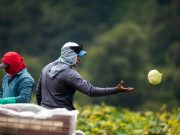
The economy of Chiriqui maintains a distinctly agro-industrial structure. This sector remains the leading source of employment and economic activity in the province, featuring production chains that span from the Highlands to the valleys of the David District.
However, the model faces structural limitations: high logistics costs to the country's main export hubs, a lack of advanced industrialization, and a reliance on intermediaries to bring products to international markets.
Infrastructure: A Factor Transforming the Economy
In recent years, public investment in roads, regional connectivity, and modernization of infrastructure has been a key driver of change in Chiriqui. Improvements to routes serving David, the Highlands, and the border with Costa Rica are fostering greater integration across the region's productive areas.
This process is beginning to create the material conditions necessary for more complex regional integration in the future.
Puerto Baru: A Project Redefining the New Phase
The flagship project of this new phase is the development of Puerto Baru, a multipurpose port initiative with an estimated investment of nearly $250 million.
Its goal is to enable a portion of the western region's output to access more direct export routes, thereby reducing reliance on traditional hubs in the country's central region.
This future logistic hub has attracted business interest, it remains in the development phase; consequently, its economic impact will be felt in the near future.
Puerto Armuelles: Key to Infrastructure Diversification
In parallel, the rehabilitation of the Puerto Armuelles area aims to bolster the logistics capacity of western Chiriqui. Although it is not yet a fully operational port hub, it plays a complementary role within the strategy to diversify maritime infrastructure.
The Panama-David Railway Corridor
The concept of a railway corridor between Panama and Chiriqui has gained traction as a vision for national integration. However, it currently remains in the conceptual and design phase.
Its prominence in economic discourse reflects a growing perception: the need to improve structural connectivity in western Panama.
Towards an Agro-Logistics Corridor
Today, Chiriqui is moving toward becoming an international logistics hub, with plans to build the consolidated, multimodal infrastructure required to compete with established logistics centers in the region.
Yet, a more strategically significant development is underway: the gradual formation of an Agrologistics corridor linking production with export potential. Chiriqui is currently a region in transition a territory where the traditional economy and logistics ambitions are beginning to converge.

Mariato: Where Sea, Sky and Community Become One
In southern Veraguas, the district of Mariato offers one of the most authentic nature experiences in the Panamanian Pacific: sea turtle watching. Between June and December, beaches such as Mata Oscura, Playa Malena, and Cascajilloso welcome turtles every night as they emerge from the ocean to nest, creating an unforgettable natural spectacle.
Through The Eco-Ruta Tortuga promoted by the Fundación Agua y Tierra, ECOTORTU, and the local communities themselves, visitors can experience this in a responsible and safe way. Night tours, guided by trained community monitors, allow visitors to observe the nesting process and learn about the efforts made by communities to protect nests and conserve these threatened species.
Inmersive Cultural Experience
The experience goes far beyond the sighting. Travelers can stay in rural houses and small community lodgings, enjoy local gastronomy, and discover nearly pristine beaches surrounded by unique natural landscapes. Community hosts complement the visit with traditional meals, crafts, and cultural activities that reflect the hospitality of Mariato.
You are Invited to Celebrate the X Ecotourism, Cultural, and Sea Turtle Conservation Fair, from September 18 to 20!
Since 2001, the Asociación Conservacionista de Playa Malena (Playa Malena Conservation Association) has carried out outstanding conservation and environmental education work to protect the region's sea turtles. As a testament to this effort, between June 2025 and March 2026, the organization successfully released 64,650 hatchlings. This work is crucial, as most sea turtle species are vulnerable and some are in danger of extinction due to threats such as pollution, accidental capture in fishing nets, the loss of nesting beaches due to coastal development, and the disorientation of hatchlings caused by artificial light.
Today, Mariato represents a new way of traveling in Panama: more conscious, closer, and connected with nature. A destination where every visitor directly contributes to ocean conservation and the well-being of local communities.
A Journey That Brings Life
Majestic humpback whales (Megaptera novaeangliae) set sail from the cold waters of the southern continent. They travel extraordinary distances to reach the warm waters of the Panamanian Pacific with a fundamental purpose: to give life and ensure the future of their species.
These large mammals can measure between 15 and 16 meters in length. However, the most impressive thing is their magical songs, which travel long distances through the sea to express different reasons such as courtship, mating, danger situations, or intimate communication between a mother and her calf.
Between the months of June and July, the whales arrive at the coasts of Mariato, a quiet and safe place for their reproduction. Later, in the month of September, they return south, to their feeding grounds.
Whale Watching a Key Tourism and Economic Engine
Nowadays, cetacean watching has become a key tourism alternative for our region, contributing significantly to the local economy. For this reason, with the support of various institutions and organizations, tour guides and boat captains have been trained. The objective is to guarantee compliance with whale watching regulations and prevent altering the behavior of these beautiful travelers. From here, we call for the practice of responsible tourism and to discover the wonderful places that the coast of Mariato has to offer.
The Macaw Route: Uniting the Sea and the Sky
The wealth of the region is not limited to the ocean. Just as one day you can enjoy the fascinating marine life, the next day you can observe how the skies are dressed in colors with the flight of the great green macaw (Ara ambiguus) in the buffer zone of the Cerro Hoya National Park.
For this reason, the organization Panama Wildlife Conservation is promoting the Ruta del Guacamayo (Macaw Route), an initiative designed to help conserve this bird, which is critically endangered both nationally and globally.
In May of this year, a reforestation project with native species was initiated to ensure the food supply for these birds, true heroes who have resisted drastic changes in their environment. This action will also favor the preservation of the Azuero parakeet, an icon of the region.
Be Part of the Change
If you dream of protecting our biodiversity as a volunteer in these conservation initiatives, or if you prefer to experience it up close by booking a tour with us, we are waiting for you!
Find us and connect with us through our official channels:
Email: Ctur.mariato@gmail.com
Phone: +507 6472-9250
Project Social Media:
@acoplama_turtles
@fundacionaguaytierra
Website: https://panamawildlife.org/es
Photos courtesy: Camara de Turismo de Mariato

Boquete, a Tourist Town in Chiriquí Where 20% of Its Residents Are Expats
In a world where the concept of “living” is being redefined, there are destinations that no longer simply receive visitors: they turn them into...