
One of the great strengths of Panamanian gastronomy is the influence of culinary talent from around the world, which has helped create an ecosystem rich in flavor and innovation. Getting to know the key figures who have chosen Panama as the stage to showcase their talent is essential to understanding the industry’s evolution.
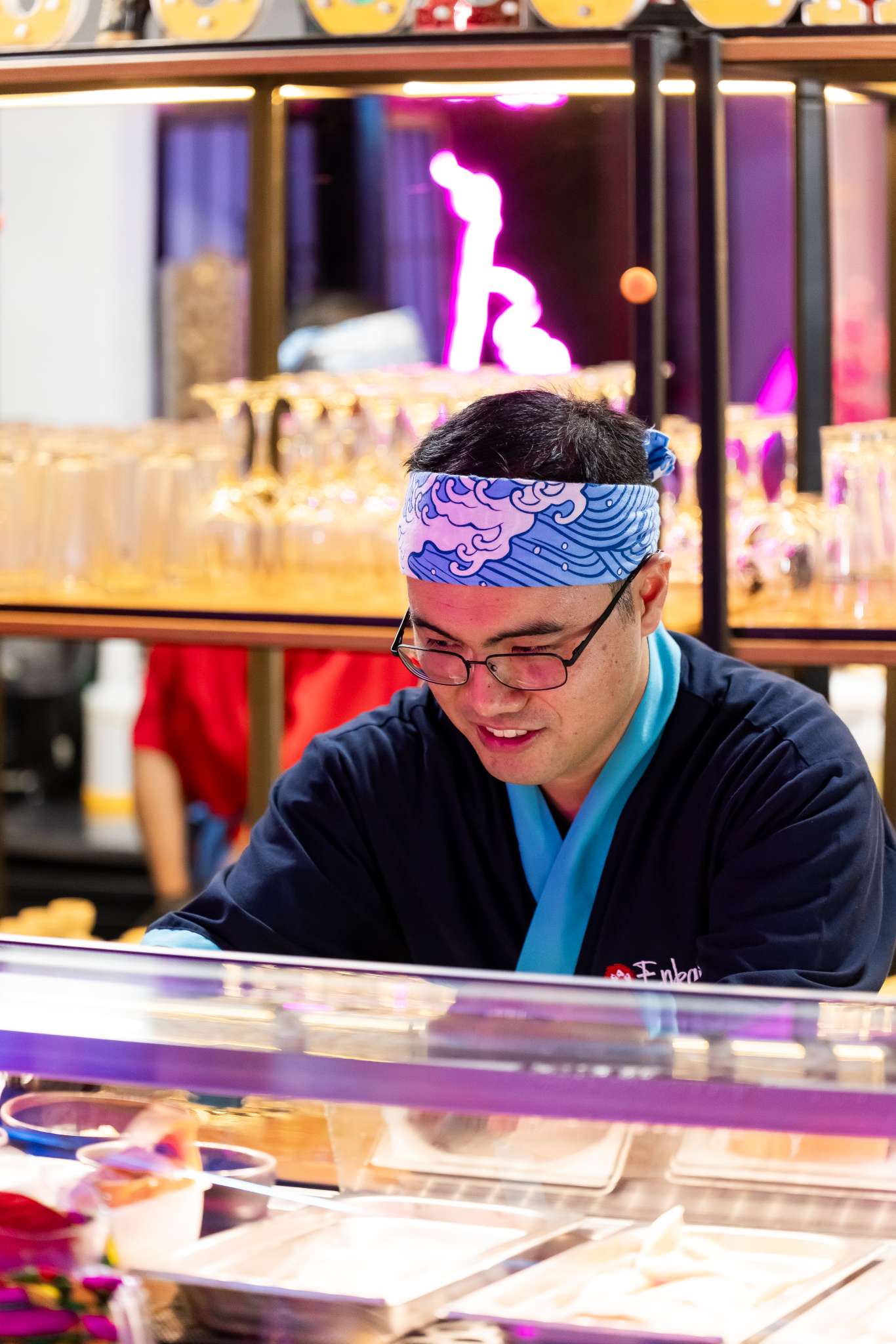
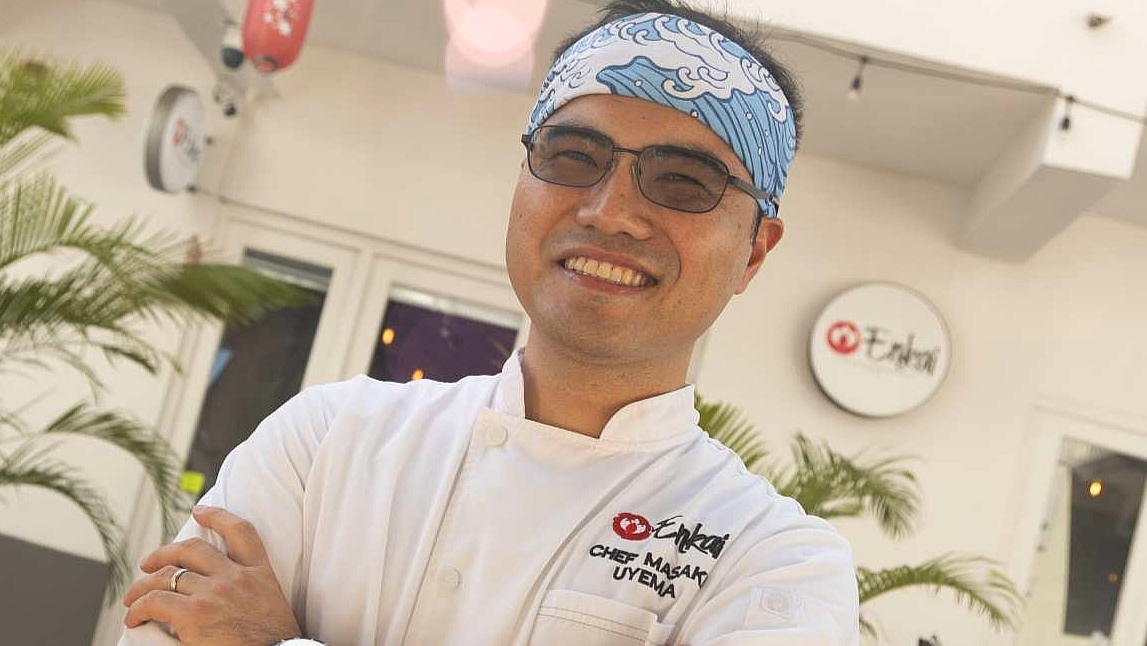
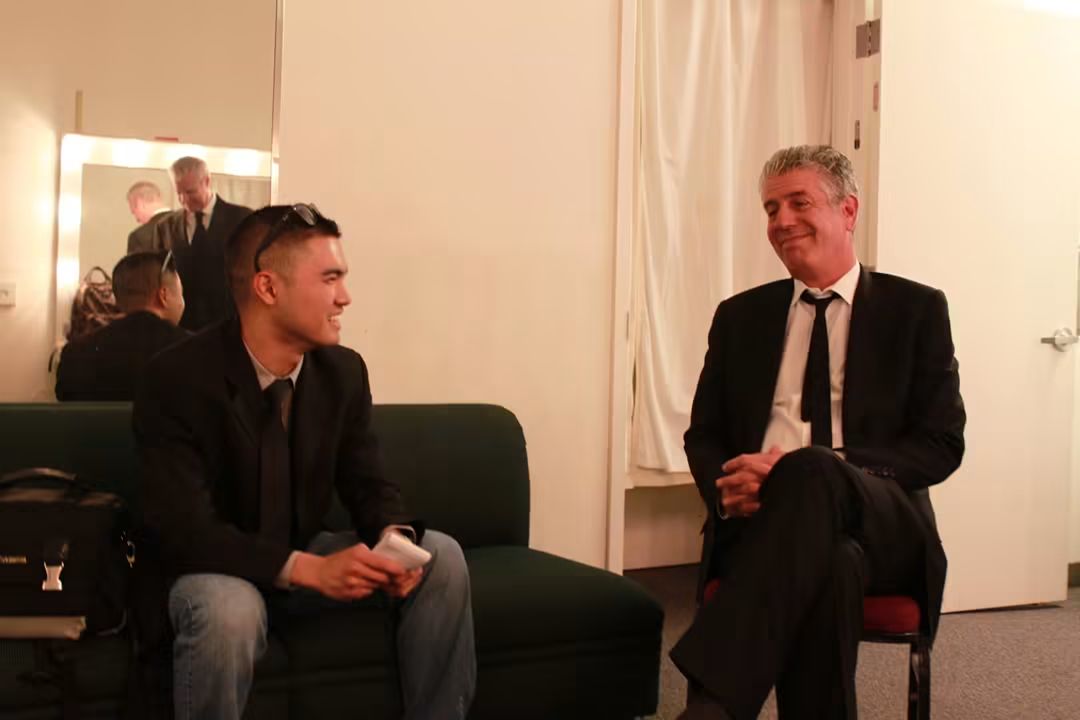
With this in mind, we feature Peruvian Chef Masaki Uyema. Trained at Le Cordon Bleu in Peru, he boasts an impressive professional track record spanning the United States, Colombia, Guatemala, and Panama—the country he represented at the 2016 S.Pellegrino Young Chef competition. Also passionate about journalism, he once had the opportunity to interview the legendary chef Anthony Bourdain. Currently leads Enkai, a restaurant specializing in renowned Nikkei cuisine; here, he shares exclusively with The Visitor – El Visitante his vision of Panama’s culinary scene, as well as his thoughts on the importance of communicating the human stories behind the industry.
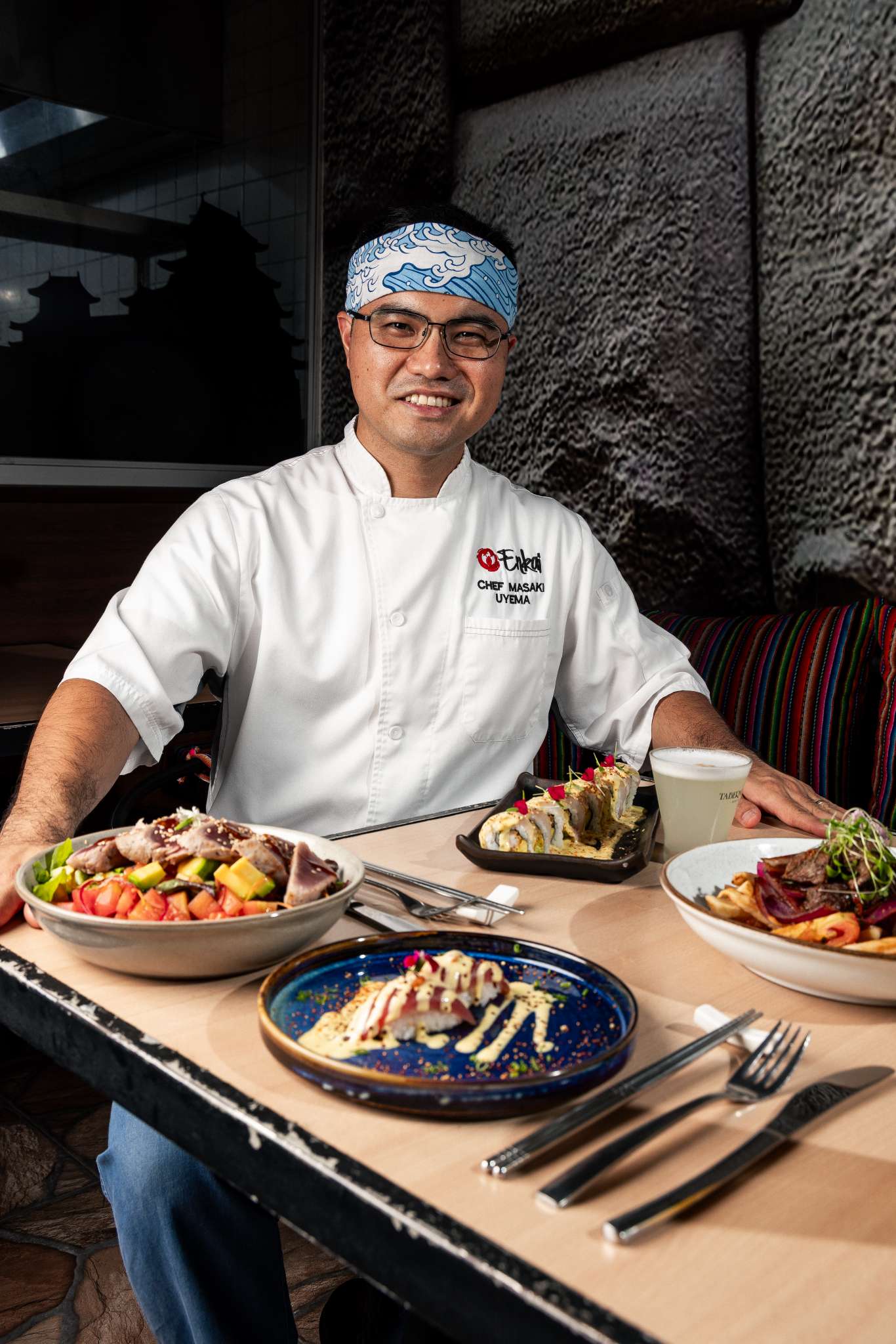
What can Panamanian gastronomy learn from Nikkei fusion to help local cuisine—which is itself a form of fusion—achieve greater international reach?
“The success of Nikkei cuisine lies in the combination of flavors from Peruvian gastronomy—with its core DNA embodied in its ajíes (chili peppers)—and the contributions of Japanese cuisine, characterized by a rigorous selection of ingredients and a mastery of techniques, especially when it comes to seafood.
I believe Panama is already doing much of what enabled Nikkei cuisine to gain global recognition. For several years now, there has been an effort to revalue local elements and, building on that, to create new culinary concepts that integrate techniques from other gastronomic traditions with Panamanian ingredients and culinary culture.
Today, there is a very compelling opportunity, as Panama increasingly embraces cuisines from all over the world. This opens the door for each tradition to contribute its best elements, blending them with Panama’s rich and vast culinary pantry.
Personally, within the context of Nikkei cuisine, this is exactly what we do every single day: we start from our own gastronomic identity to create new flavors, embracing local ingredients and discovering everything they have to offer us.”

Another of your passions is journalism—a field you worked in for a Peruvian media outlet while employed as a chef in Florida. How important is it for you to communicate the gastronomic experience as a means to foster growth and drive development?
“I firmly believe it is essential to communicate everything that lies behind each dish. We aren’t just looking at a finished preparation—which may well be excellent and delicious—but also at the labor of a fisherman bringing in the freshest catch of the day, or someone in Boquete, Chiriquí, lovingly cultivating the flowers and sprouts that we use.
Sharing these stories allows diners to better appreciate and enjoy their culinary experience, while discovering the gastronomic heritage behind each cuisine. In Nikkei cuisine, for instance, we combine techniques and flavors to highlight fresh produce and top-quality ingredients. The more effectively we communicate this richness, the greater the recognition for everyone who makes each dish possible—and the more meaningful the experience becomes for tourists, local diners, and all our visitors. Without a doubt, this enriches gastronomy and strengthens culinary tourism.”
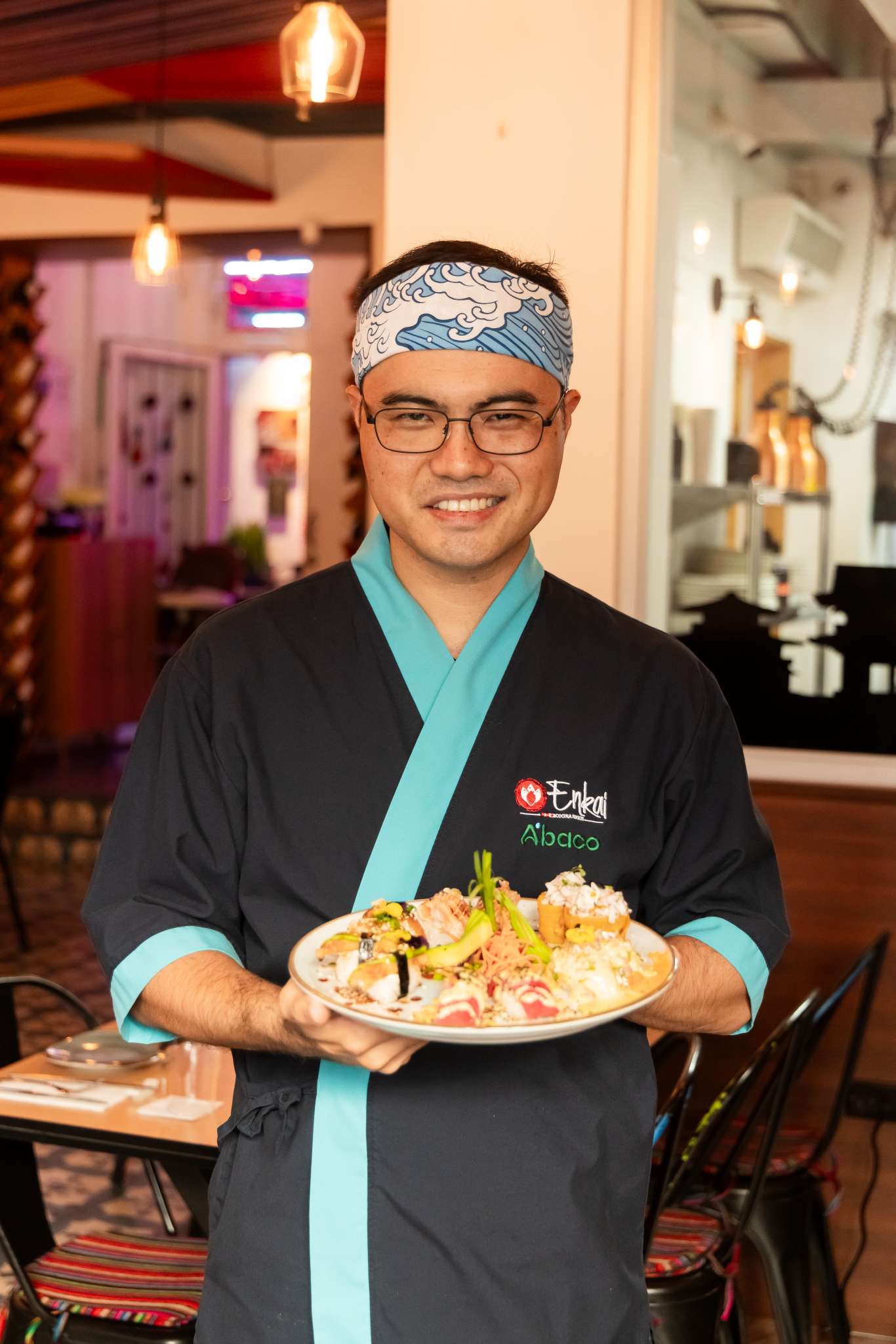
What kind of experience do you want guests at Enkai restaurants—both in San Francisco and Casco Antiguo—to have, and how do you differentiate from other Nikkei restaurants in Panama?
“I believe the guiding principle for any chef is to make others happy through their food—for something prepared with one’s own hands to be the reason someone enjoys a pleasant moment, shares a smile, or celebrates a special occasion.
In fact, the word Enkai means ‘party,’ ‘celebration,’ or ‘banquet’ in Japanese. It’s a celebration around the table, and that is precisely the experience we want every guest to have during their visit: a celebratory atmosphere, complemented by attentive service and a selection of dishes created by fusing Peruvian Nikkei cuisine with the bounty of Panama.
What sets us apart is that we aren’t just trying to bring a piece of Peru to the isthmus. At Enkai, we are deeply passionate about the opportunity to craft a new expression of Nikkei cuisine—one that emerges from the encounter with Panama’s local ingredients and everything that its two oceans and its producers have to offer.
Nikkei cuisine currently has a wonderful opportunity to create a highly enriching synergy in Panama. It’s something we love working on every single day—and, of course, sharing with all of our guests.”
How is the Nikkei experience contributing to Panamanian tourism, and how might the gastronomic industry achieve the international standing it so strongly seeks?
“I believe that in every major gastronomic capital of the world, one finds a wide array of restaurants and cuisines from different cultures. Panama increasingly offers travelers—and culinary tourists in particular—well-executed dining experiences featuring flavors from various corners of the globe.
Nikkei cuisine makes a highly valuable contribution because, by its very nature, it is born from fusion—a marriage of two distinct culinary traditions that complement each other perfectly.
For those of us who grew up enjoying flavors that blend the bold character of chili peppers, the freshness of the day’s catch, and the citrusy touch of lime—as seen in a fine ceviche or tiradito—we also understand the significance of the ritual involved in preparing food and sharing a meal.
We have a responsibility to create the ideal setting to showcase the day’s catch, as well as the produce sent to us with such care from the farms of Chiriqui—like those from our dear friend Dioselina.
Behind every dish lies a vast gastronomic ecosystem that deserves both respect and recognition.
As guests in this beautiful land—which we now proudly call home—we want to continue contributing and crafting a new story, as we move toward the international recognition that Panama truly deserves.
That said, I believe we must also explore new ways to reach travelers, so that people from anywhere in the world might consider visiting Panama, drawn by the full range of culinary offerings waiting to be discovered.
One approach is to secure more opportunities to participate in international trade fairs, while locally, we should create events that highlight and enrich our own gastronomic culture.”
Why not establish days in Panama dedicated to its most iconic dishes—much like Peru does with National Ceviche Day or Anticucho Day? I am sure that, like me, many chefs would be delighted to create their own versions of these dishes and promote them as part of the gastronomic richness that a visitor can discover in Panama.
Tell me about the three dishes most sought after by diners at your restaurant, and why.
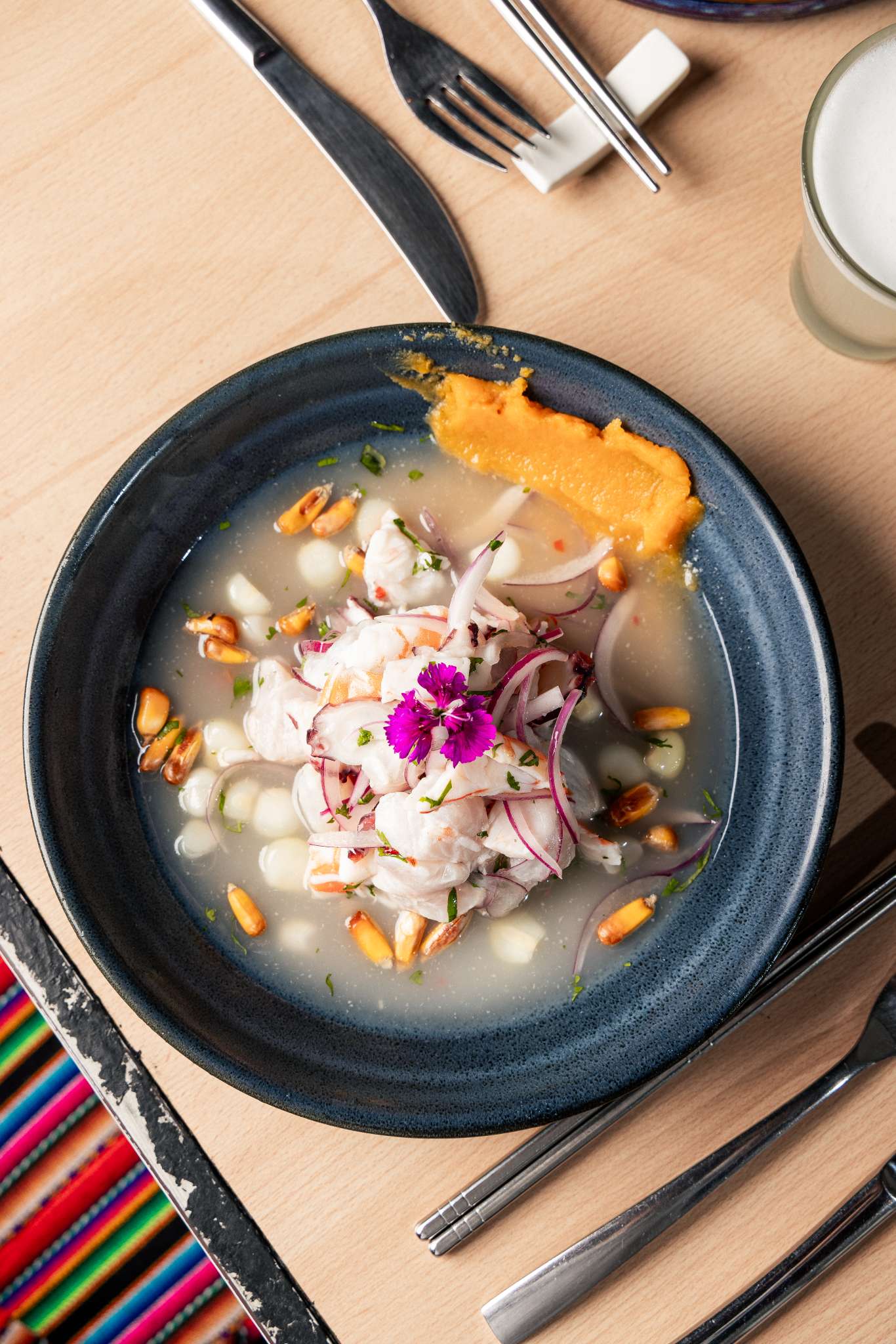
Ceviche Limeño:
This dish serves as our central theme for showcasing the freshness of the catch of the day. We prepare it using a leche de tigre (tiger’s milk) infused with Panamanian ají chombo—a twist on the traditional Peruvian ají limo. Each bite captures the freshness of the sea, complemented by a delightful, zesty heat that contrasts beautifully with the comforting texture of Peruvian choclo (large-kernel corn), the crunch of chulpi corn, and our sweet potato, orange, and cinnamon mousse. It is a dish that brings together freshness, intensity, and a perfect balance of flavors.
Lomo Saltado Enkai:
This dish relies on the signature smoky flavor imparted by the wok, with the beef tenderloin cooked to perfection and the vegetables kept crisp—al dente. We put our own Nikkei spin on this classic of Peruvian cuisine by serving it with togarashi-spiced potatoes and Japanese rice croquettes—which become absolutely irresistible when dipped into the succulent lomo saltado sauce.
It is our way of reinterpreting a classic while staying true to its essence.
Caribbean Samurai:
This is one of our most popular dishes, especially among tourists. It features the catch of the day, cooked to perfection and served with a coconut-jalapeño sauce that instantly evokes the flavors of the Caribbean. We top it with tajadas (fried plantain slices), toasted coconut, and cashews, accompanying it with fresh wok-seared vegetables and yakimeshi (Japanese-style fried rice). It is a combination that fuses the flavors of the Panamanian Caribbean with Japanese culinary techniques—perfectly reflecting the new expression of Nikkei cuisine that we are so passionate about developing at Enkai.