


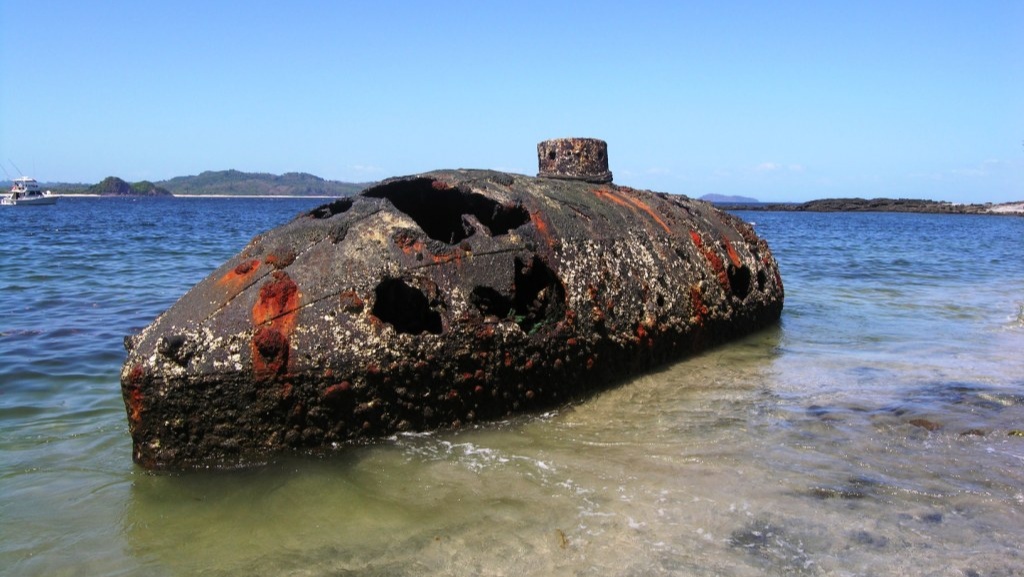
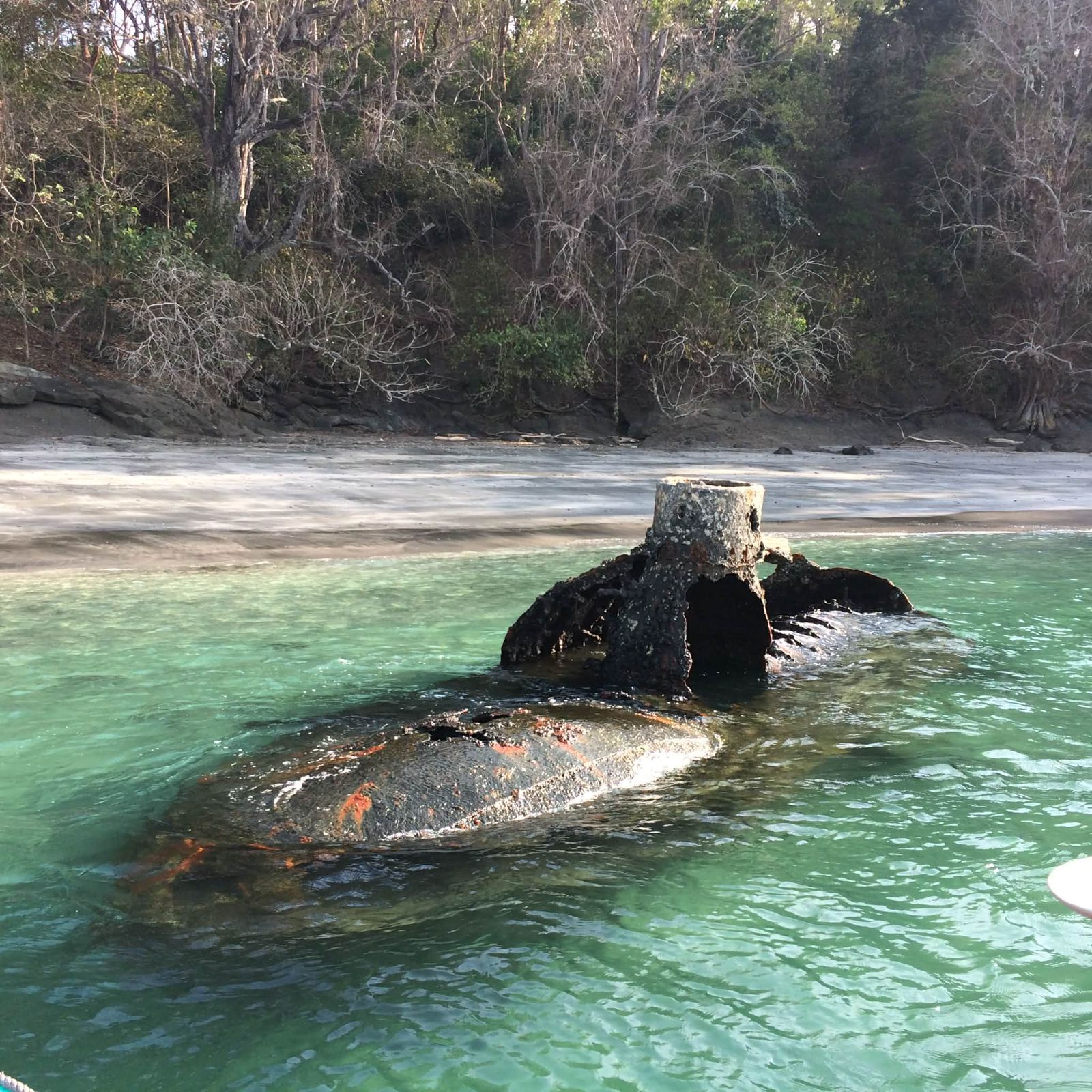
The rusting remains of the Sub Marine Explorer rest quietly in Panama’s Pearl Islands, bearing witness to one of the most ambitious and dangerous chapters in early marine engineering. Built between 1863 and 1866 Brooklyn, New York, by German inventor Julius Kroehl for the Pacific Pearl Company, the Sub Marine Explorer was a technological marvel for its time: the first submersible capable of diving and resurfacing independently, without assistance from the surface.
Engineering Achievement with a Deadly Outcome
Hand-powered and cigar-shaped, the vessel featured pressurized working compartments and a sophisticated ballast system that allowed it to submerge by taking on water and rise by using compressed air. It could dive more than 100 feet and remain underwater for hours—an extraordinary achievement in the mid-19th century. Yet this success came at a deadly cost. After nearly every dive, crew members experienced a mysterious and severe “fever.” At the time, its cause was unknown. Today, it is recognized as acute decompression sickness, or “the bends.”
Transported to Panama to Collect Pearls
The submarine underwent proof-of-concept trials for only a year before tragedy struck. In September 1867, Kroehl himself died from the same illness that had afflicted his crew. Despite this, the vessel’s revolutionary design overshadowed the unexplained fatalities, and it was transported to Panama to harvest pearls in the Pearl Islands, but the deaths continued. In 1869, an entire crew succumbed to what was again described as “fever” after deep dives with no understanding of safe ascent profiles. The Sub Marine Explorer was abandoned in a cove near San Telmo Island in the Pearl Islands Archipelago and slowly faded from history.

Rediscovery in 2001
For more than a century, its corroding hull was known to local residents, who assumed it was a relic from World War II. That misunderstanding ended in 2001, when maritime archaeologist James P. Delgado recognized its true significance. With the support of submarine historians Richard Wills and Eugene Canfield, the wreck was correctly identified, leading to four archaeological expeditions between 2002 and 2008.
These investigations produced detailed documentation, scientific analysis of corrosion, and interpretive reconstructions of the vessel. Funded by institutions including the NOAA Office of Ocean Exploration and the Waitt Institute for Discovery, the work confirmed that the submarine is in a critical state of deterioration. A 2007 report recommended its recovery, preservation, and public display in Panama.
Symbol of Human Innovation
Today, the Sub Marine Explorer is listed in the U.S. National Park Service’s Historic American Engineering Record and has been featured in international documentaries. It stands as a powerful symbol of human ingenuity—and of the high price paid when innovation races ahead of scientific understanding.